Seeing 2D quantum materials from new angles
Researchers from different areas of quantum condensed matter came together at Nordita to explore the rapidly developing physics of two-dimensional materials.
Experiments on two-dimensional materials are revealing quantum phenomena that researchers are only beginning to understand. One of the most striking discoveries is the fractional quantum anomalous Hall effect, observed in specially structured forms of extremely thin materials.
The results have prompted questions about how topology and strong interactions between electrons combine to produce unusual states of matter. Experiments have indicated chiral superconductivity, exotic forms of charge order and quantum phase transitions that may fall outside established theoretical frameworks.
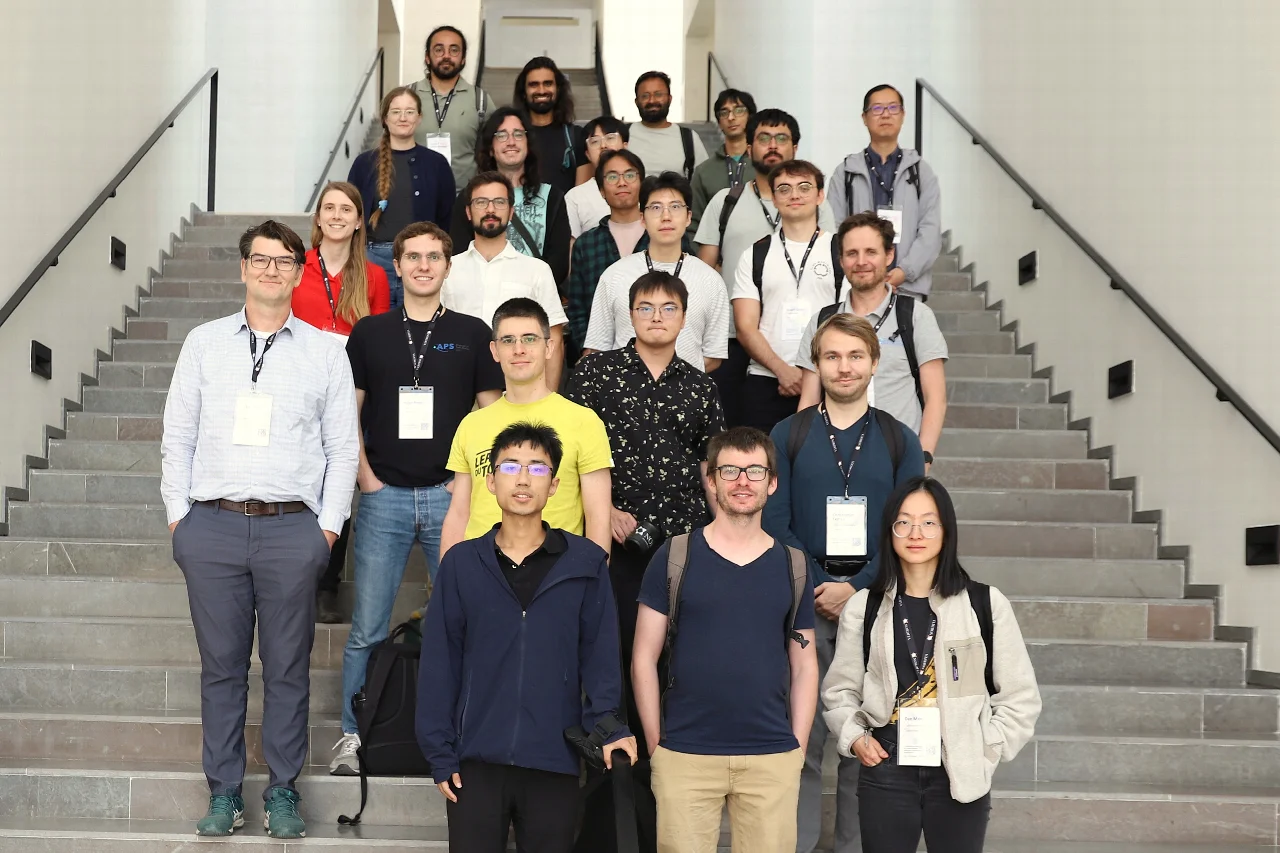
These were some of the questions discussed at the Nordita scientific program A Multicultural Approach to Fractionalization and Electronic Correlations in 2D Materials, held from August 10 to 28. The program brought together researchers using different theoretical and numerical methods to study this fast-moving field.
“Personally, I think this is a very exciting time for condensed matter research, with many rapid developments. New experimental results are arriving at a pace that theory cannot keep up with,” said organizer Ahmed Abouelkomsan. “To understand these recent experimental developments, it is crucial to combine different approaches, ranging from numerical computations to field theory. This was the main aim of the program.
Tomohiro Soejima, Assistant Professor at New York University and associate research scientist at the Flatiron Institute, used the occasion to present work that was still very new. “I was able to present very new results and receive feedback for the first time outside my immediate collaborators, on which parts are interesting and what I should clarify more,” he said. Soejima and his closest collaborators primarily use numerical methods, while some of the other participants approach similar problems through field theory. “My immediate collaborators are all in a numerical framework, so this program helped me think about problems in a new light,” he said.
One conversation led him to reconsider a phase transition he had studied numerically.
“I realized that there were some aspects of the phase transition that I had not thought through that carefully and, as a result, had not measured,” he explained. “With people who are more experienced with this phase transition, I was able to think about how to measure these aspects.”
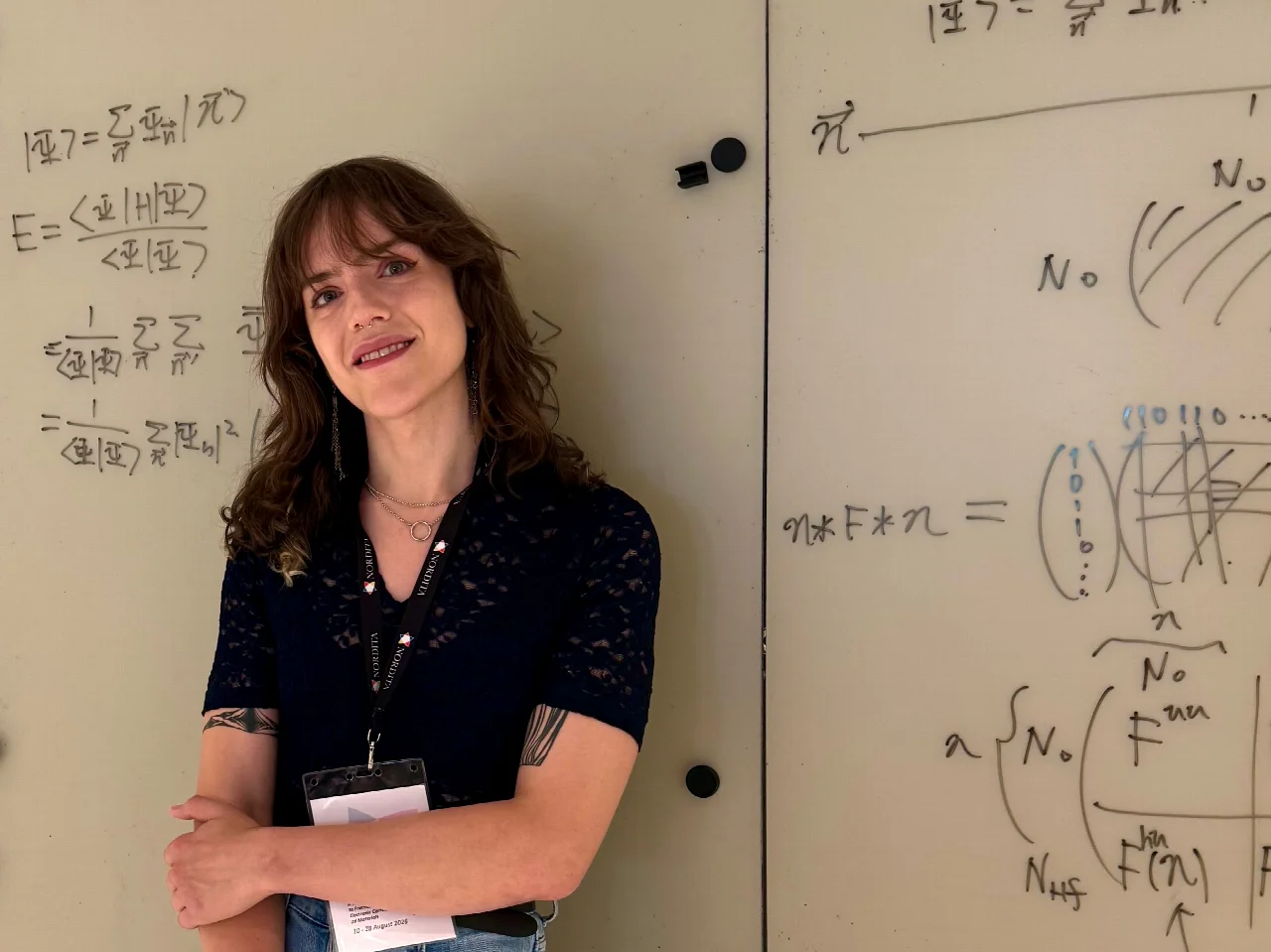
For Leyna Shackleton, a Pappalardo Fellow in Physics at MIT, the program focused on a subject that has been one of her main research interests for the past five or six years. Among the participants were people she already knew, but also researchers she had not previously met. “Listening to what people are working on and making connections has definitely changed how I think about some of the problems I’m working on,” she said.
Shackleton also valued the chance to step outside the research culture of her own university and encounter other ways of approaching the same problems.
“When you’re at a university, people have a specific way of thinking,” she said. “It is good to come across perspectives from more numerically oriented people and from people who are more equation- and theory-oriented.”