Recent observations from the James Webb Space Telescope (JWST) and the Atacama Large Millimeter/submillimeter Array (ALMA) have revealed disk galaxies much earlier in the history of the universe than researchers expected. These discoveries have led to new questions about how galaxies form and how different galaxy structures such as spiral arms, bars and star-forming regions emerge.
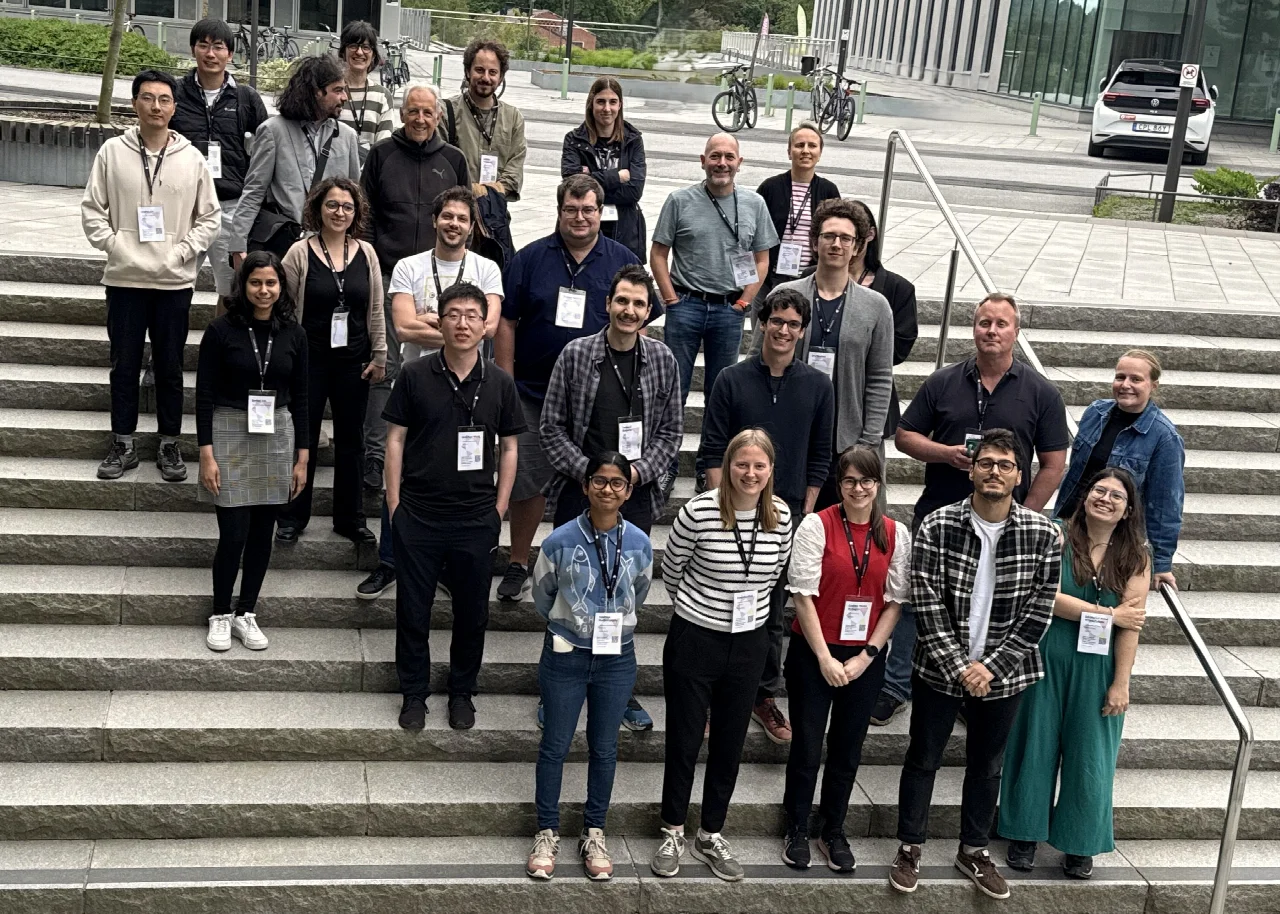
At the recent Nordita program Zoom In: Galaxy Disks Across Cosmic Time, researchers working on galaxy formation, observations and simulations came together to discuss these questions.
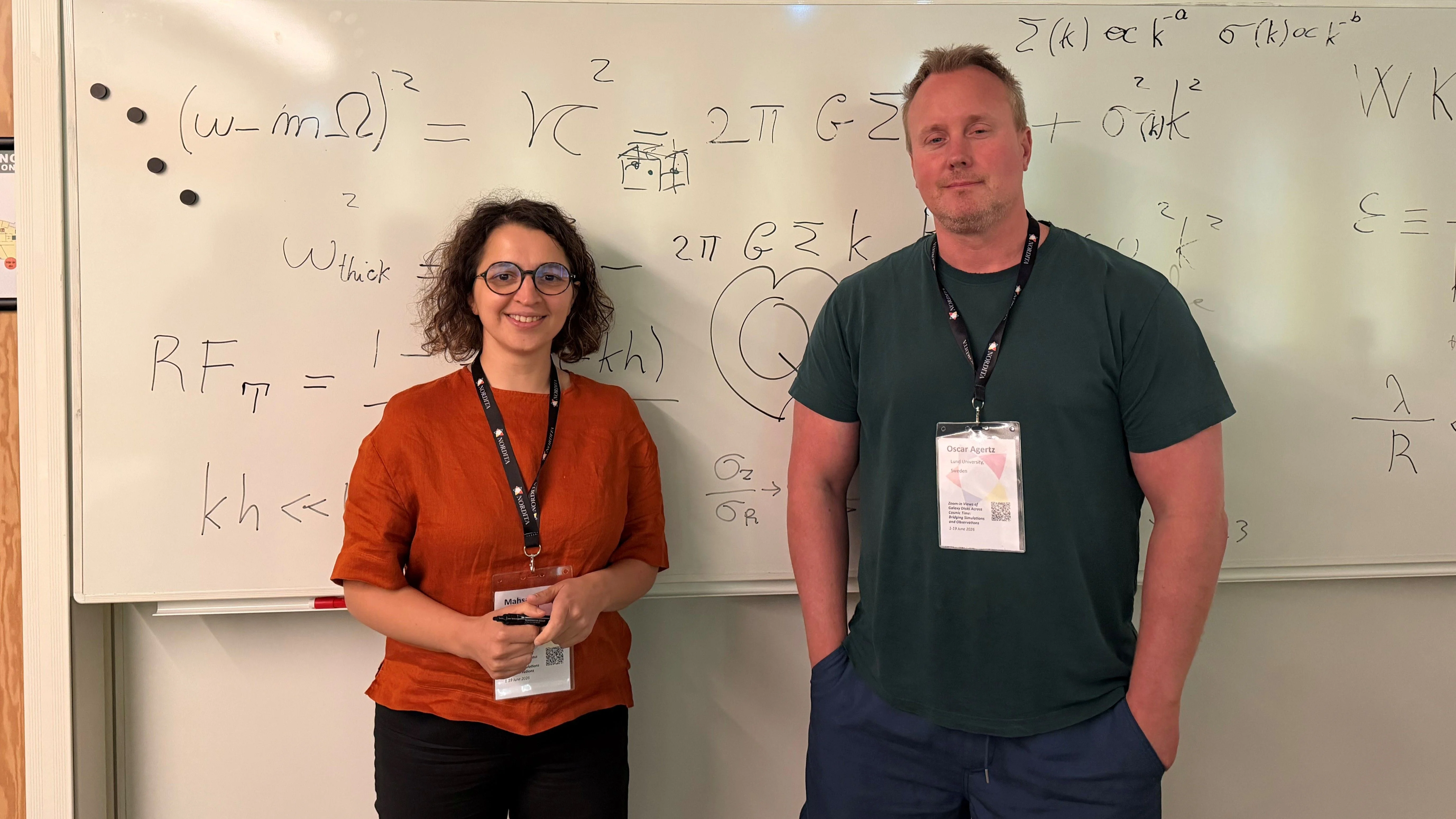
“We are trying to understand how galaxy disks form and under what conditions different structures appear,” says organizer Oscar Agertz, associate professor at Lund University. “With ALMA and JWST we can observe galaxies at increasingly early epochs, which opens up many new questions.”
These observations have challenged some long-held assumptions about when disk galaxies form.
“We naively thought that disk formation would take much longer than what we see now,” says Andrea Ferrara, professor at Scuola Normale Superiore in Pisa. “Back then we didn’t have the numerical simulations that we have today.”
According to co-organizer Mahsa Kohandel, postdoctoral researcher at SNS in Pisa, one of the main aims of the program was to bring together observers and simulators, who often approach the same questions from different perspectives. Recent developments in the field are creating a growing need for collaboration between the two communities. “When observers and simulators come together, there is sometimes confusion because we approach the same questions in different ways,” she says. “One of the goals of the program was to create a space where those connections could be made.”
According to Kohandel, the extended format of the Nordita program created opportunities for discussions that are difficult to achieve during a traditional conference.
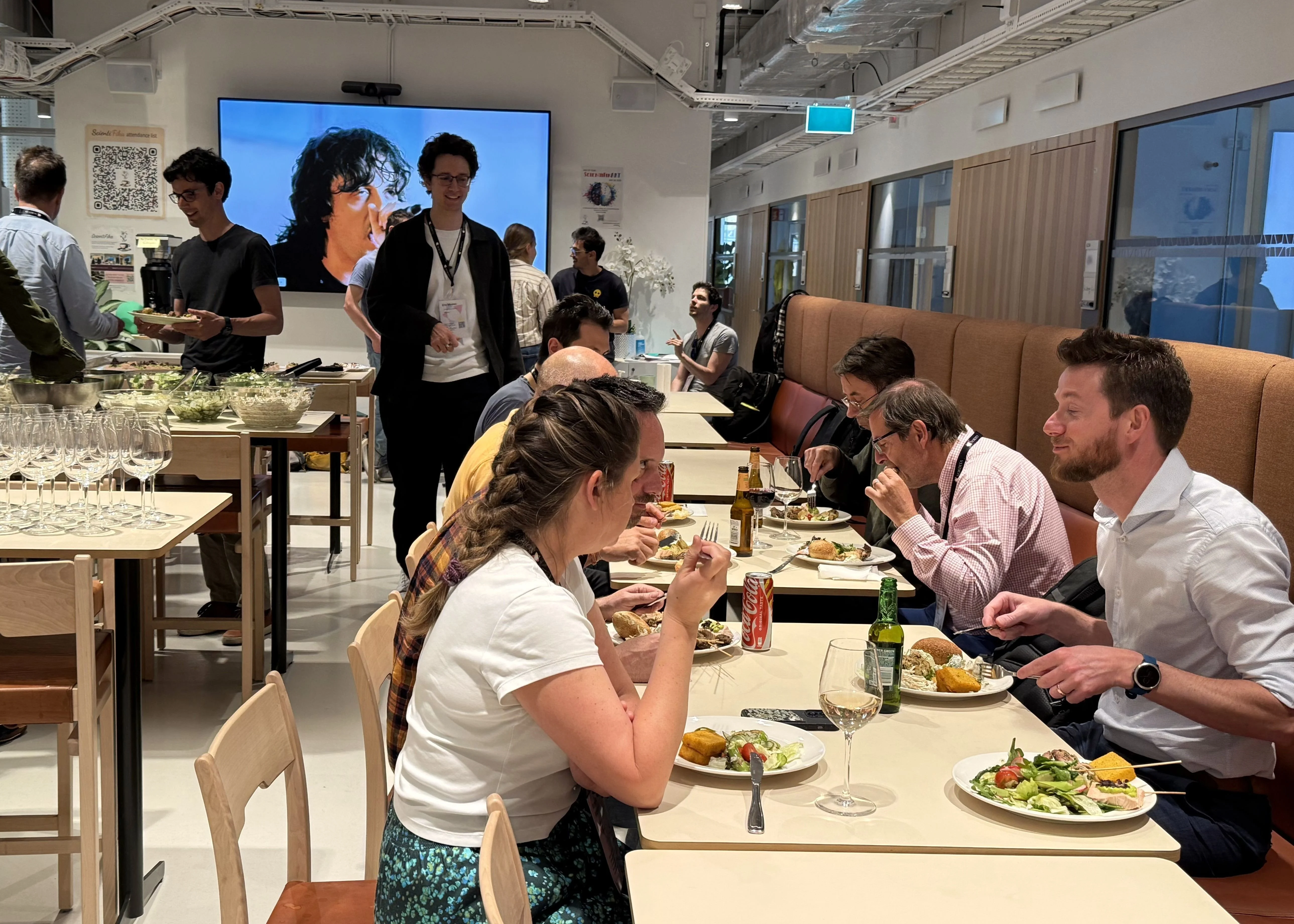
“Observers and simulators need to speak the same language,” says Kohandel. “Over three weeks, people had time not only for talks, but also for long conversations during lunches, coffee breaks and informal discussions.”
For many of the participants, these informal exchanges turned out to be among the most valuable aspects of the program.
“The discussions during coffee breaks and outside the sessions have been a huge advantage,” says Camilla Thune Nyhagen, a second-year PhD student at Lund University. “I’ve gained new ideas, new perspectives and potential future collaborations. It is really valuable to know what the other participants are working on and to be able to ask questions and discuss the different perspectives.”
Ferrara agrees that the opportunity for direct interaction is difficult to replace.
“The possibility to talk to people and ask questions is so much more valuable than just reading papers,” he says. “You can’t ask questions or discuss with the paper” he adds with a smile.