Finding a common language for plasma physics
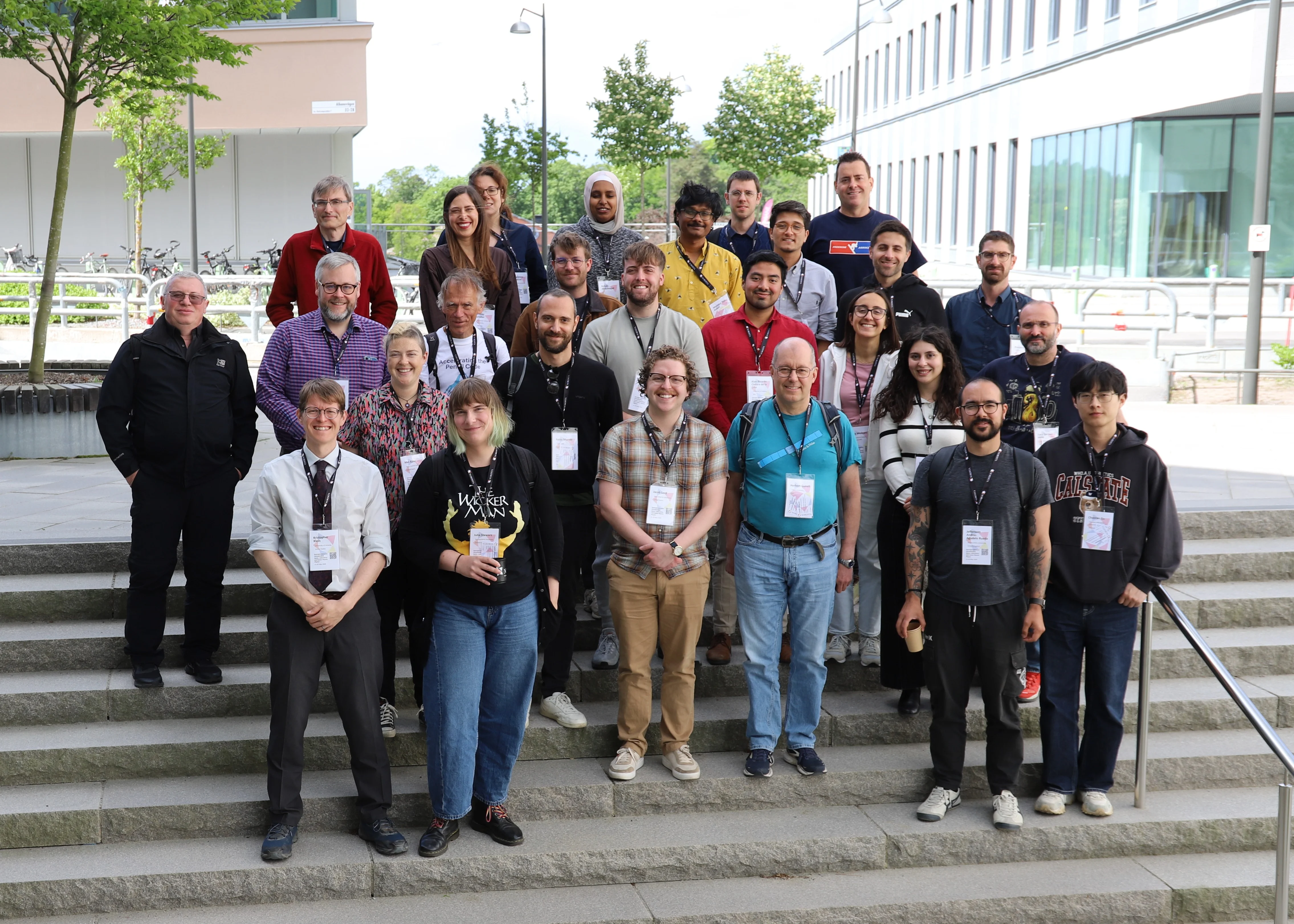
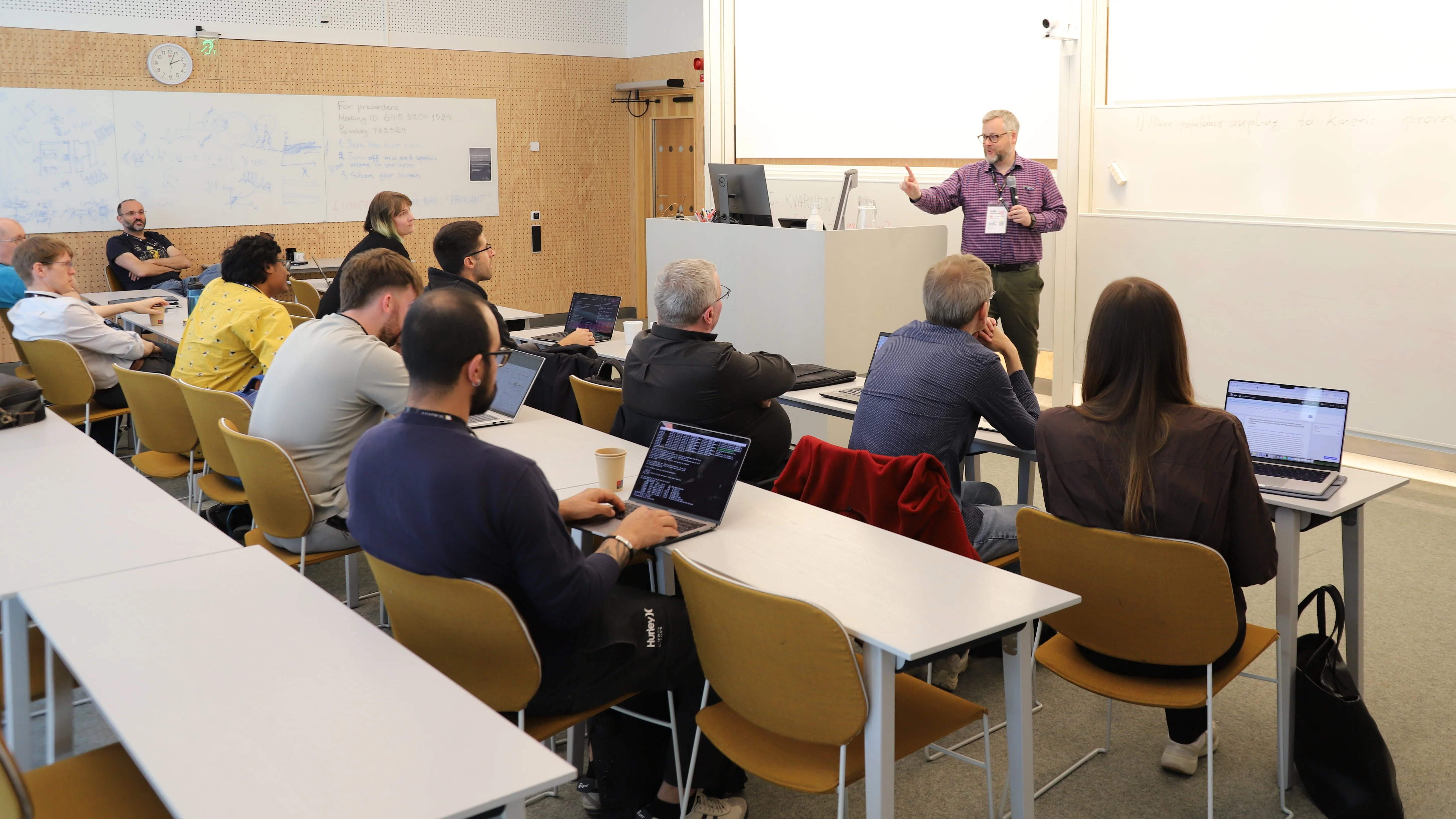
Researchers studying plasmas in fusion reactors, the solar wind, laboratory experiments and distant astrophysical objects gathered at Nordita from 11–29 May for the scientific program Synergies Between Astrophysical, Space, Laboratory, and Fusion Plasma Physics.
Although these fields all study plasmas, they often operate separately. “The systems are fundamentally different,” says organizer Luca Sorriso-Valvo (CNR/ISTP and KTH Royal Institute of Technology). “They occupy very different regions of parameter space, so it is natural that the communities have developed separately.”
Researchers in fusion, astrophysics, space physics and laboratory plasma physics also tend to use different methods and mathematical languages. One of the aims of the program was therefore to develop a common language for discussing similar physical processes that occur in different plasma systems.
The three-week program focused on collisions, magnetic reconnection, and turbulence and wave-particle interactions. Participants worked on developing common frameworks and rescaling parameters so that systems from different fields could be compared more directly.
Space physicists can make direct measurements using spacecraft, laboratory and fusion researchers can perform controlled experiments, while astrophysicists must infer plasma behavior from observations of distant objects. Bringing these perspectives together was a central part of the program.
For participant Sara Molisani, a PhD student, one of the most important outcomes was the opportunity to start new collaborations. “We were able to start several collaborations,” she says. “We discussed ideas for new experiments that we can run in our laboratory based on observations and theories from other plasma communities.”
“You gain a better understanding of the same physical process when you see it from the point of view of other plasma environments,” says Molisani. “It gives you a clearer picture of the research topic.”
The organizers are now preparing a special issue of Physics of Plasmas based on the program, and discussions are underway about future joint grant applications.