
Discussions during the poster session at the Polaritonic Chemistry workshop.
In polaritonic systems, light and matter can become so strongly coupled that they form new hybrid quantum states.
Last week at Nordita, researchers gathered for the workshop Polaritonic Chemistry – Coherent Quantum Control of Molecules with Modified Vacuum Fields, exploring how strong light–matter coupling can alter molecular behavior and material properties.
Under these conditions, light and molecular excitations can merge into hybrid quantum states known as polaritons. By manipulating the electromagnetic environment surrounding molecules, researchers aim to better understand how energy transfer, conductivity, and even chemical reactivity can be modified through these effects.
“This workshop aims to advance the field of molecular polaritonics by gathering experts to understand how strong light-matter coupling can be harnessed to control chemical reactivity and energy transfer through the strategic manipulation of a molecule's electromagnetic environment,” says organizer Markus Kowalewski.
The workshop brought together theorists and experimentalists, with presentations and discussions addressing both fundamental theoretical questions and the complexity that emerges when strong light–matter coupling is studied in realistic systems.
Researchers hope that a deeper understanding of these effects could eventually contribute to technologies such as light-driven nanocatalysts, electro-optical devices, and new types of chemical sensors.
“What has stood out so far is how successfully the workshop has stimulated lively discussions between experiments and theory,” says Kowalewski. “The great atmosphere and Nordita’s stimulating environment were appreciated by all participants.”
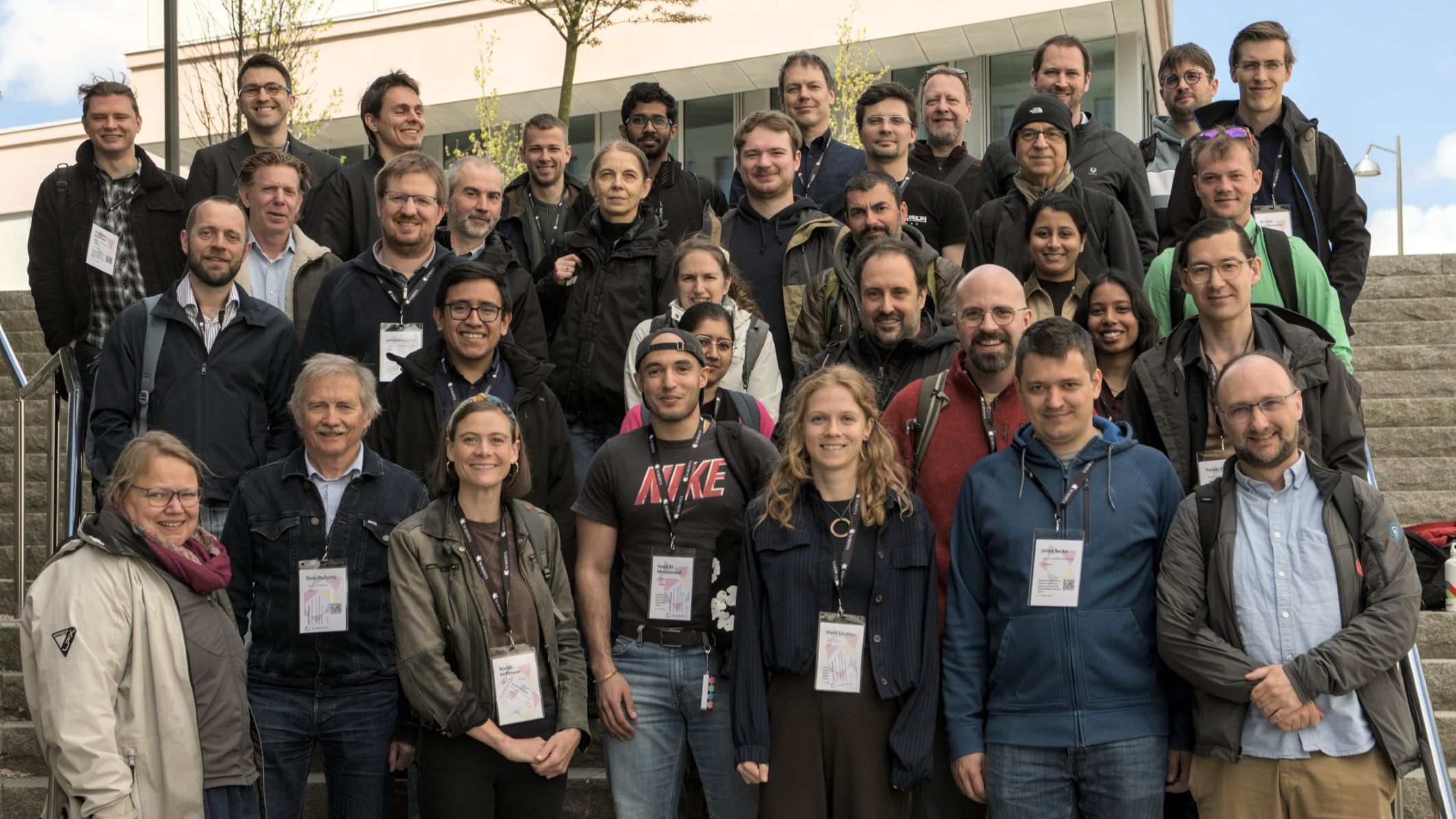
Participants at the workshop Polaritonic Chemistry – Coherent Quantum Control of Molecules with Modified Vacuum Fields at Nordita.