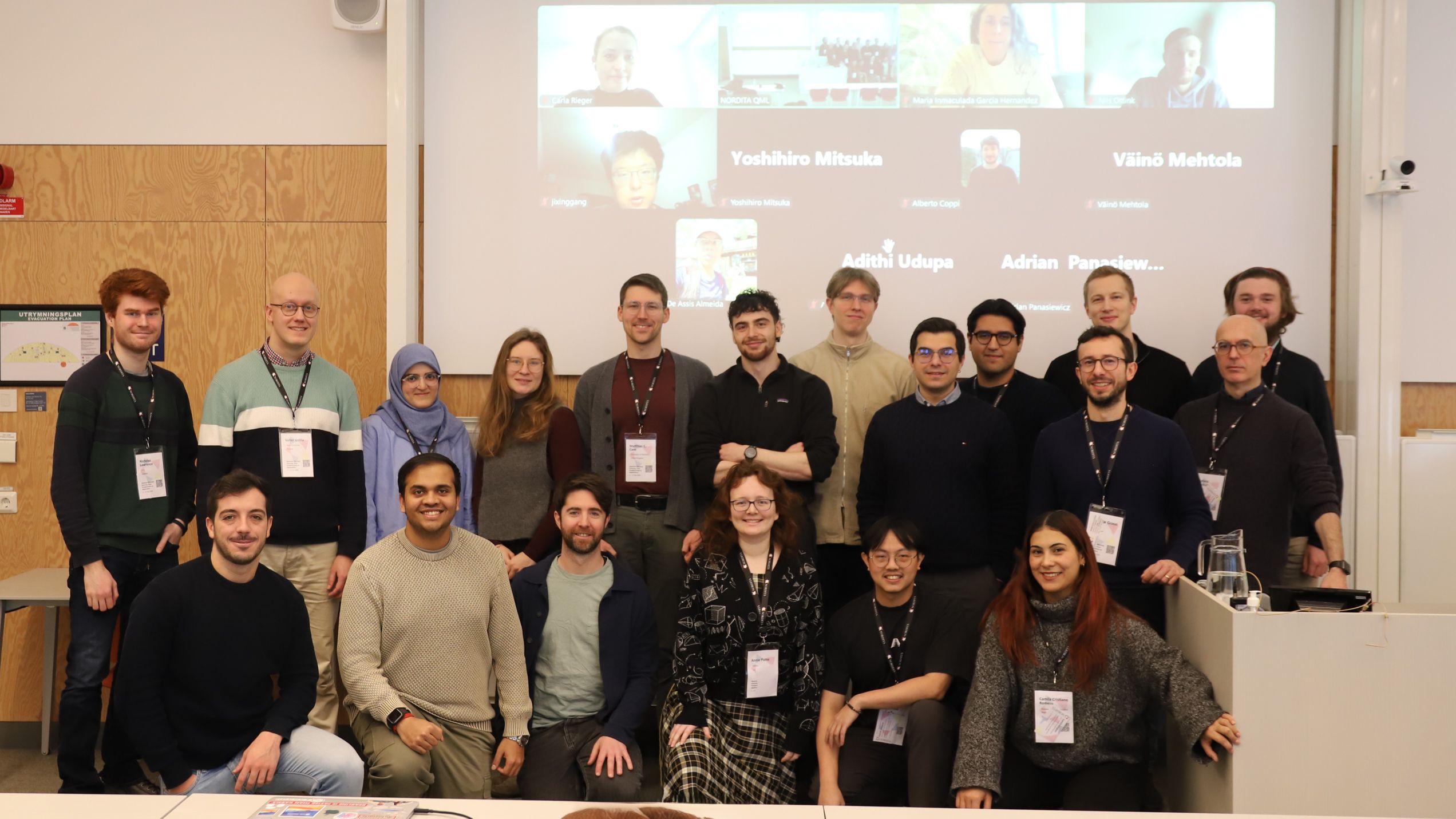
Participants of the Nordita Quantum Machine Learning program gathered in Stockholm, including a few joining remotely.
Over two weeks in February, researchers from academia and industry gathered at Nordita for a focused program on Quantum Machine Learning (QML), a field rapidly evolving at the intersection of quantum computing and artificial intelligence. At a moment when multiple models and paradigms are being proposed, a key question is how to build scalable approaches that can work in practice.
According program organizer Michele Grossi (CERN Quantum Technology Initiative), a central ambition was to create space not only for invited talks, but also for discussion and collaboration.
“It’s an important event especially for young researchers, not only to listen to leading experts, but to interact with different research groups and build connections,” he says. “The format also opens opportunities for mentorship and strengthens networking between academia and industry.”
The two-week format combined invited talks, tutorials, and breakout sessions. Grossi points to the flexibility of the program structure as an important strength:
“There was enough time during lunch and breaks for informal discussions. The format was flexible enough for everyone to follow, while still allowing depth.”
A recurring theme throughout the week was the need to integrate QML theory with practical implementation, as a way to connect abstract model development with technology.
A central question during the round-table discussions concerned scalability - that is, how to move from small experimental demonstrations to realistic quantum systems. While theoretical understanding of QML models continues to advance, participants emphasized that theory alone is not sufficient.
“We cannot rely only on theoretical understanding,” Grossi notes as a main conclusion from this session. “It is crucial to implement these models on existing technology and stress-test them to see realistically where we can go.”
Rather than attempting to replicate classical machine learning approaches on quantum hardware, the discussion focused on finding areas where quantum systems may offer genuinely new capabilities.
Looking ahead, participants identified error correction as an important area to focus on over the next five years, as there is enough knowledge and technology also is mature enough.
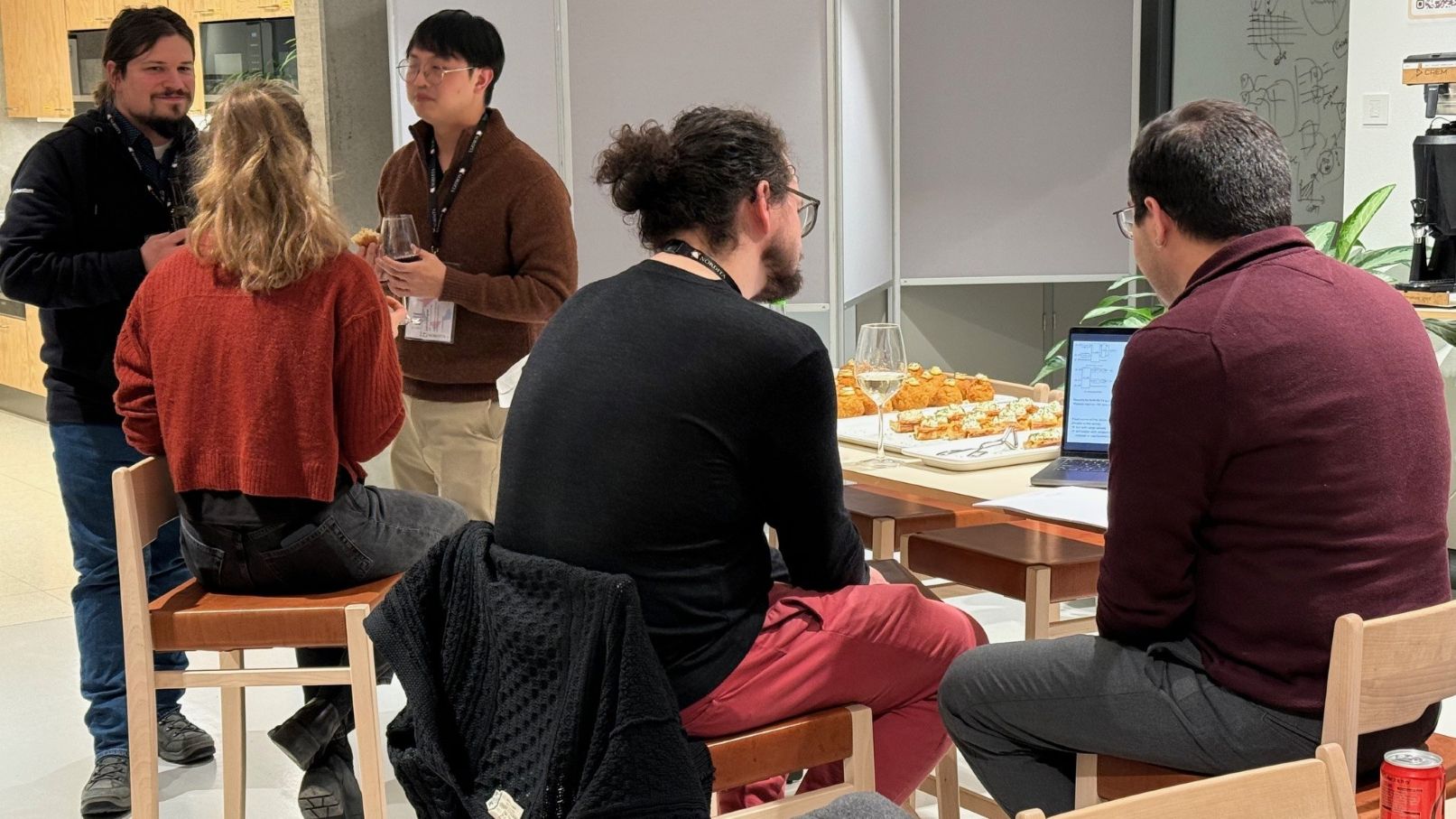
Participants mingling and discussing during the first week poster session.