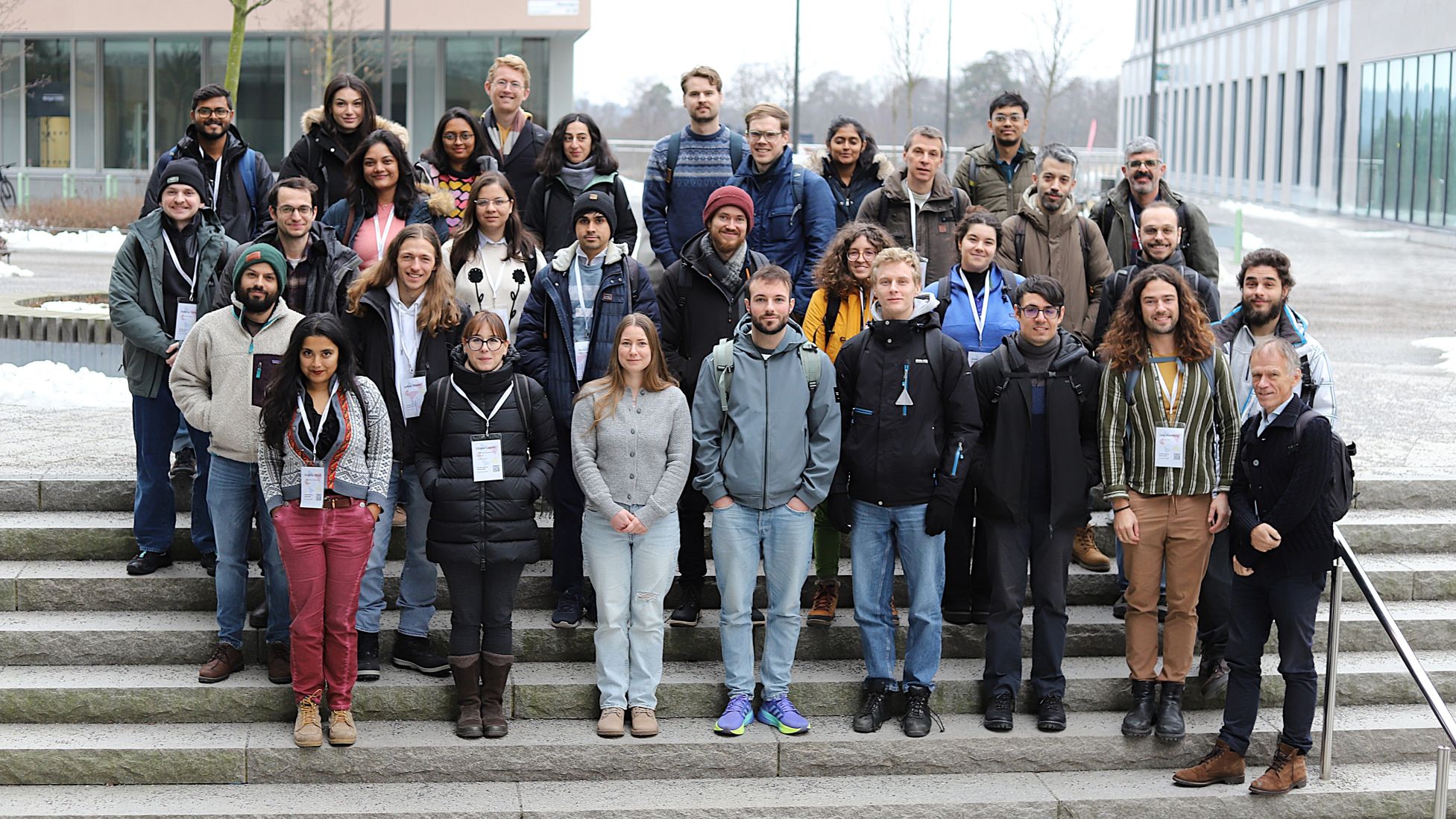
Participants at Nordita’s Winter School on cosmological magnetic fields, January 2026.
This January, Nordita is hosting a two-week Winter School on cosmological magnetic fields, bringing together PhD students from around the world working on theoretical, computational, and observational aspects of the field. The school focuses on the generation, evolution, and observation of primordial magnetic fields, and their role in understanding the early Universe.
“The Winter School has attracted PhD students from around the world working on theoretical, computational, and observational aspects of primordial magnetic fields. We hope this cohort will be at the forefront of future research on cosmological magnetic fields, using them to learn about the first microseconds of our Universe,” says professor Axel Brandenburg, one of the organizers of the school.
Among the participants is Anna D’Ambrosio, a second-year PhD student at the beginning of her doctoral project on primordial magnetic fields. She was drawn to the Winter School by its broad scope.
“I like that the Winter School covers many topics, both observational and theoretical,” she says. “At the beginning of my PhD, it’s really useful to get a broad perspective on the whole field. I didn’t realize how many different aspects there are - I thought it was mostly theoretical, but I was surprised by the strong numerical and observational efforts as well.”
In addition to lectures and discussions, the Winter School offers many opportunities for getting together socially with the other participants during coffee breaks, receptions and dinners. The international and welcoming atmosphere is an important part of the experience. “The people, and the setting, are fantastic. It is great to be able to talk with students from so many different countries,” Anna adds. “The professors have also been really kind and welcoming.”
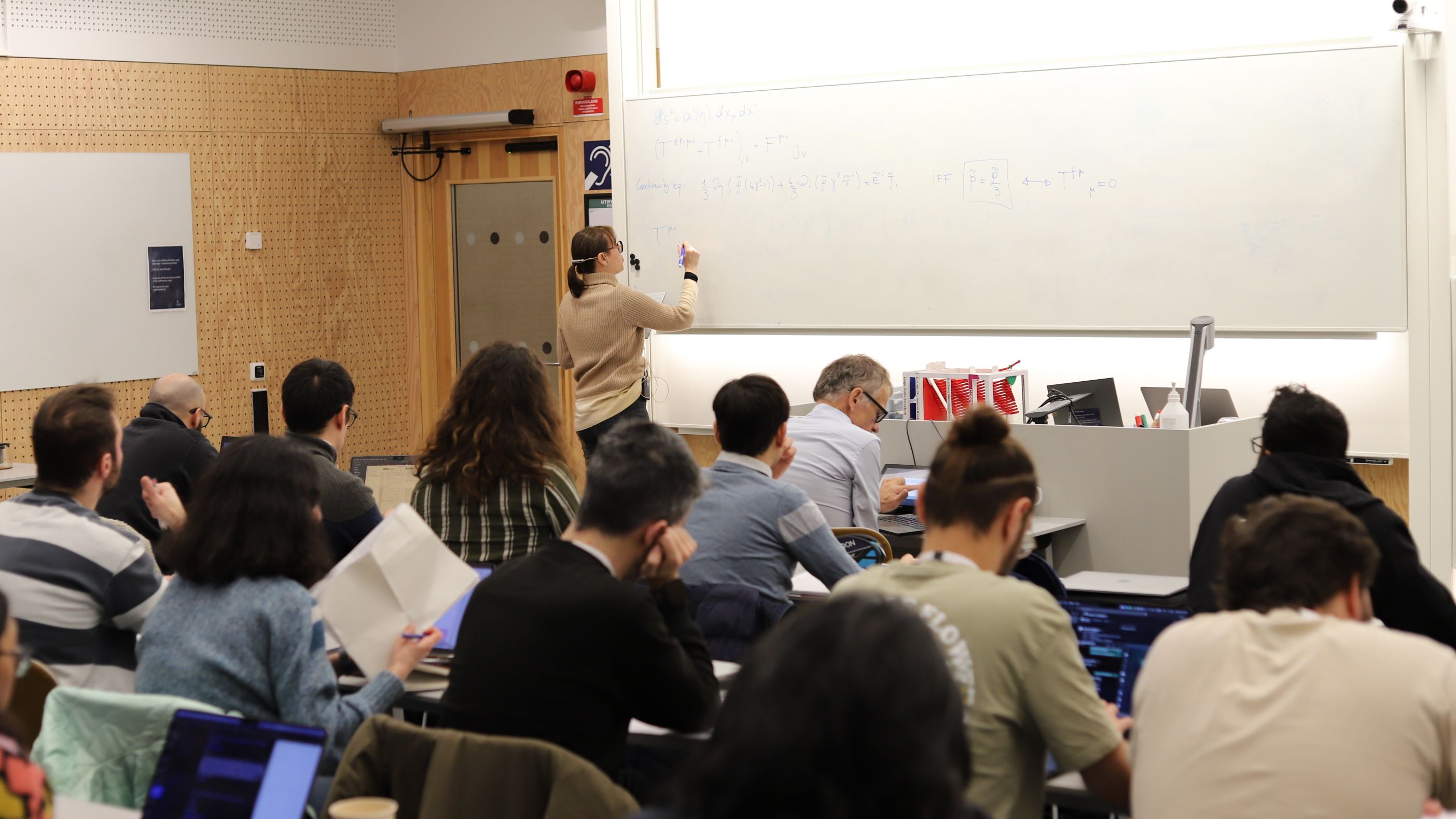
A lecture session.
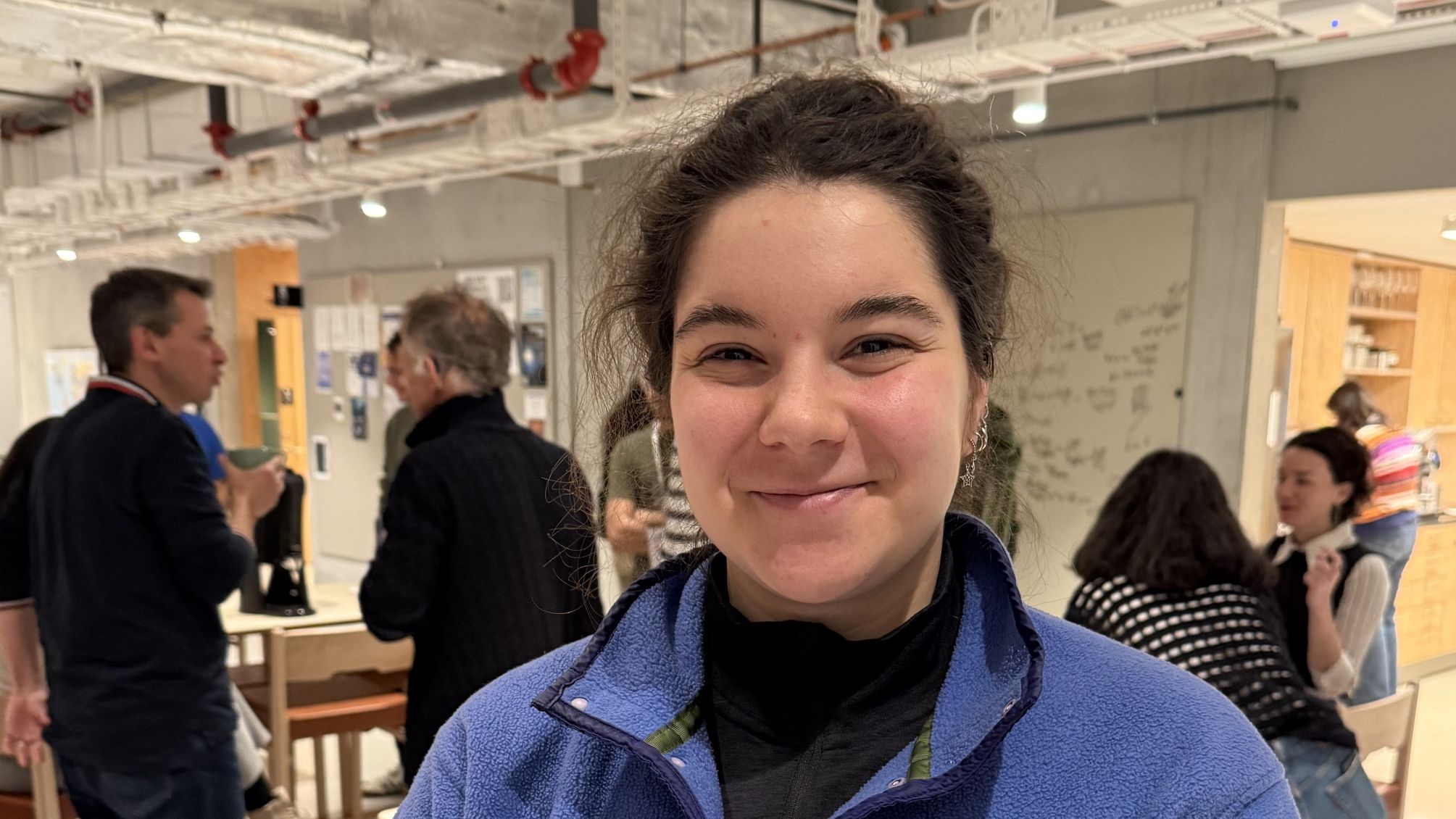
Participant Anna D’Ambrosio (SISSA, Italy) during one of the coffee breaks.