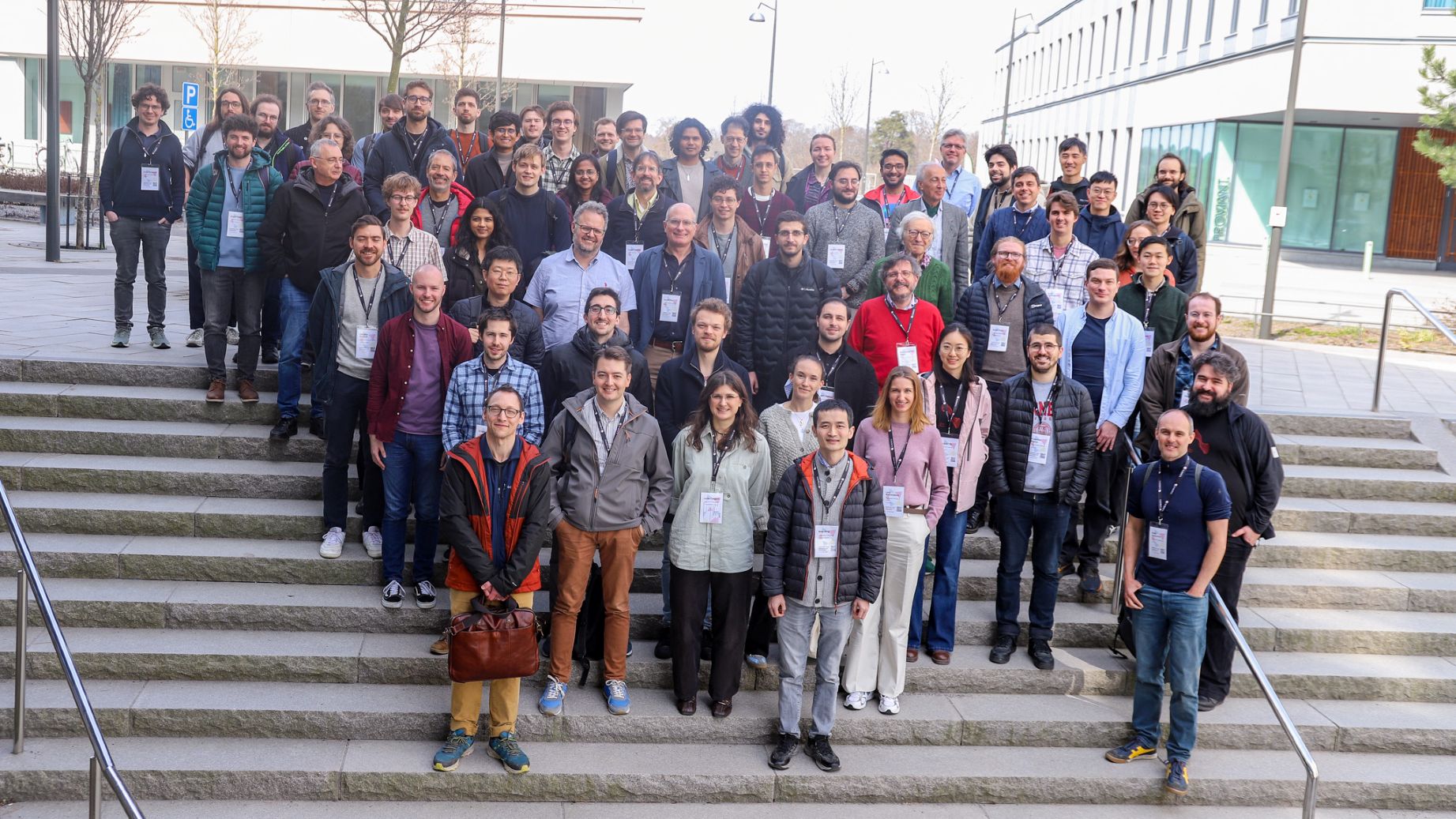
Participants in the workshop Amplitudes, Strong-Field Gravity and Resummation.
At the recent workshop Amplitudes, Strong-Field Gravity and Resummation, researchers working on different approaches to gravitational wave modeling were gathering. The main goal was to connect the weak-field and strong-field methods and frameworks within gravitational wave physics, in order to solve a unique shared challenge.
“The background is the upcoming LISA mission, a new space based gravitational wave detector approved by the ESA last year and planned for launch in 2035.” Says Riccardo Gonzo, one of the organizers. “With this project there is a need for very high accuracy. This is essential both for detecting signals and for being able to extract detailed information about systems like merging black holes”
Bringing together communities that have traditionally developed separately, is an important part of this effort.
“In order to advance precision, and fill the current gaps, it is important for researchers from the different communities to come together and talk to each other in order to find a common language and better understand how to be useful to each other,” explains Gonzo.
Before the workshop, there was also a PhD school focusing on foundations and tools for gravitational wave modeling.
PhD students Guangzi Xu and Majed Khalaf attended both the PhD school and the workshop:
“The mathematical and coding tutorials were especially valuable at the PhD school, and also getting an introduction to the amplitudes field that I wasn’t familiar with” says Guangzi. “At the workshop, it has been really interesting to understand what the other community needs in order to cross-check their results with us and it’s also been great socially, to get to know everyone working in the field. I’ve been having very good discussions with people that are potentially future collaborators”.
“Hearing it directly from people from whose work you usually just read in papers, has been really valuable,” adds Majed. “I’m also presenting and it’s a great opportunity to share my work with an ideal audience”.
Postdoctoral researcher Lara Bohnenblust emphasizes the value of being exposed to different approaches:
“Seeing different frameworks and methods has influenced how I think about my own work. I have been learning about new frameworks which I bring with me as inspiration for future projects”.
Gonzo reflects on what has really stood out to him over these two weeks at Nordita:
“It is the effort of researchers from different communities are making to communicate across different perspectives, to bridge the gaps and understand each other’s methods, in order to get the very accurate models we need going forward”.
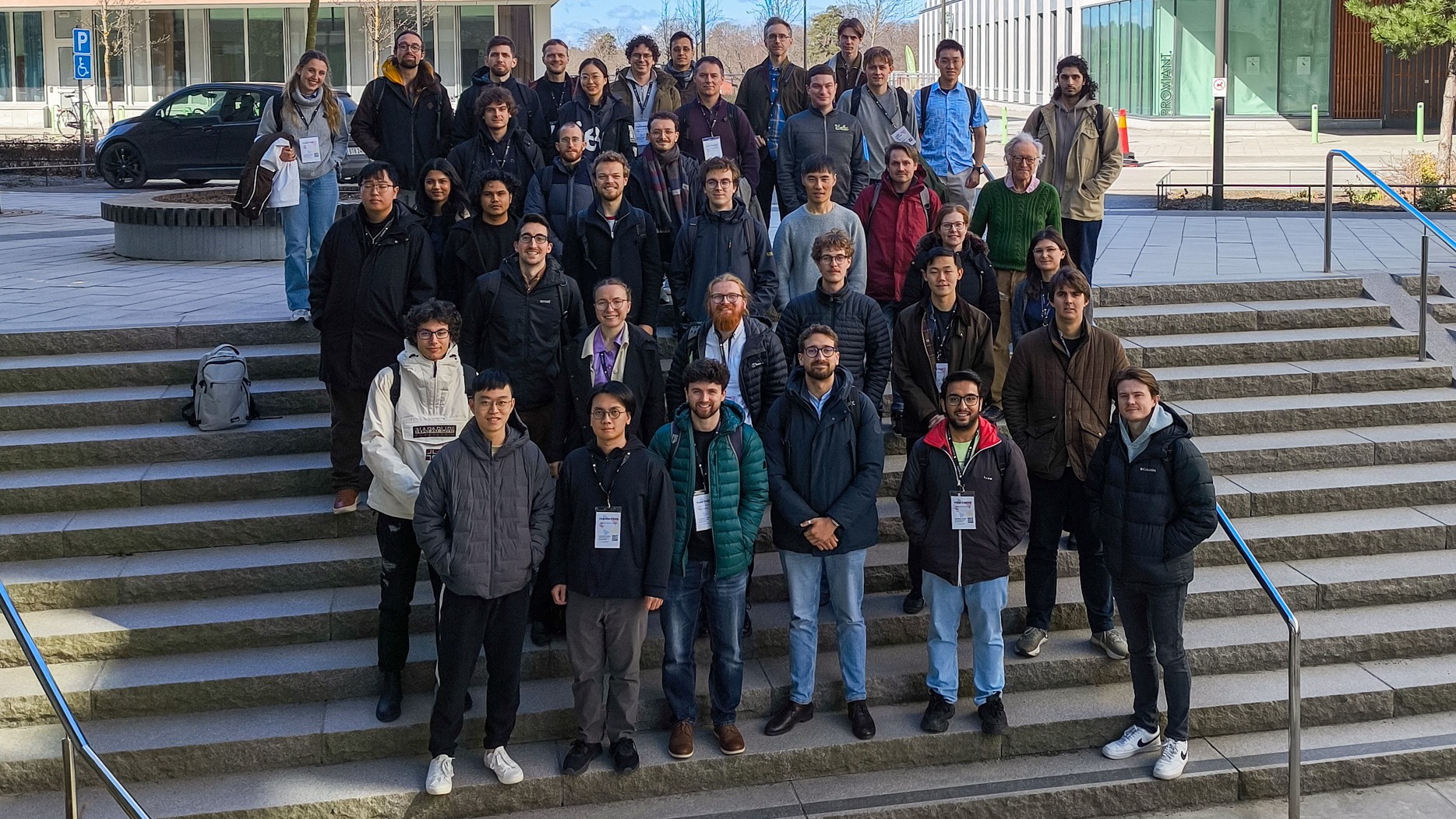
Participants in the PhD school held as part of the workshop Amplitudes, Strong-Field Gravity and Resummation.
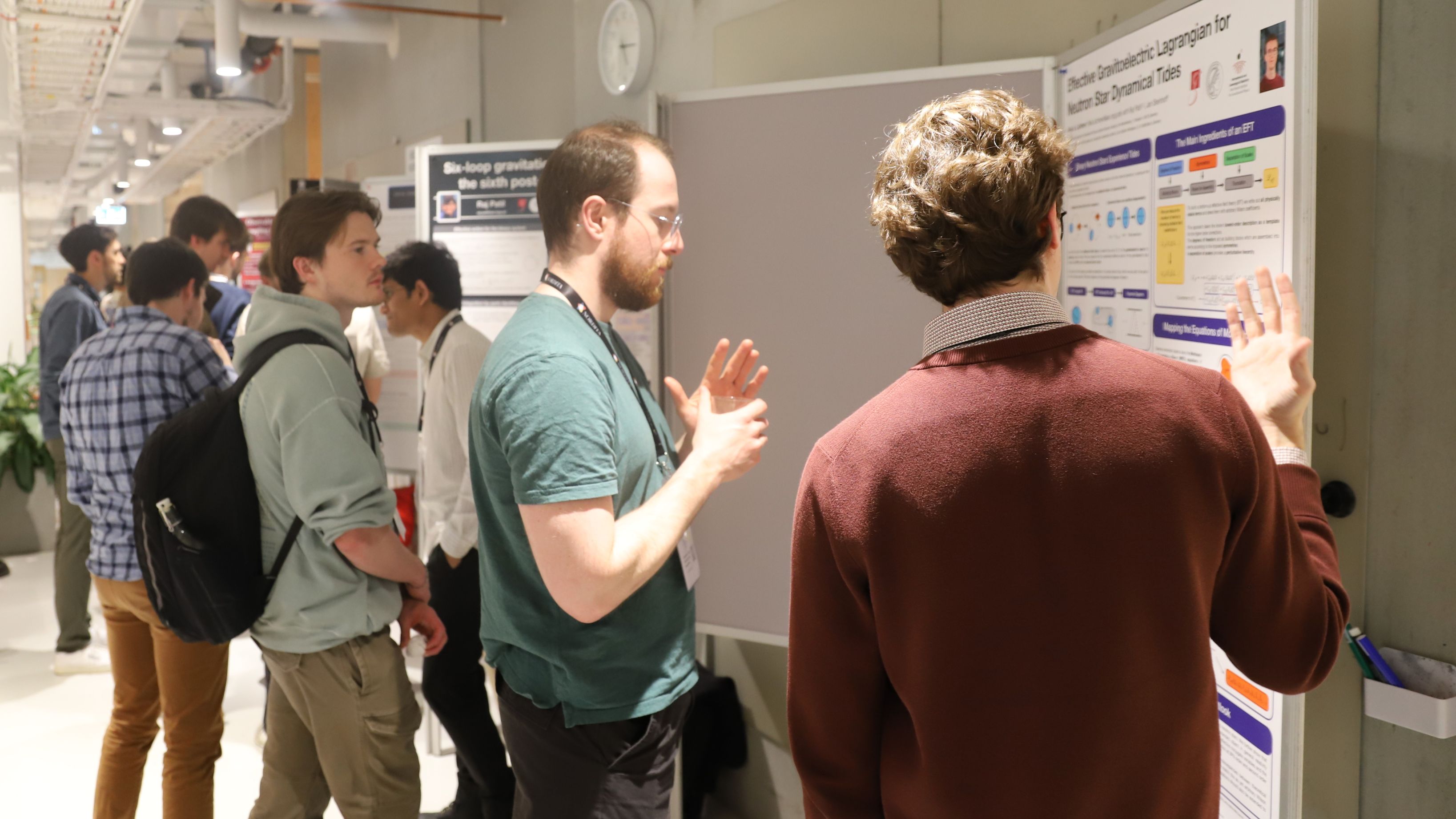
Participants discussing research during the poster session.